by Avis Licht
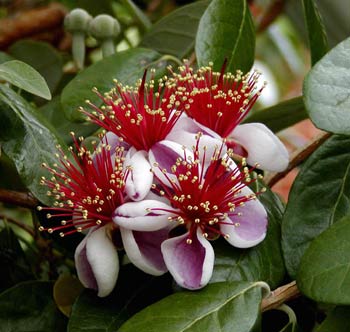
You can eat the petals from this plant. They’re good!
The Pineapple Guava is one of my favorite plants. It serves many purposes in the edible garden. It’s an easy care, evergreen shrub that has edible flowers, edible fruits and somehow, the deer DON’T eat it. How could you know?
Where I live, deer eat almost all our plants, so having one that does all these good things is a real treasure.
Climate:The Pineapple guava grows in Zones 8 – 10. What this really means is that it likes some cool weather, can go down to 10 deg. F, likes rain in the 30″ – 40″ range, and doesn’t like super hot daytime weather – not so good in the desert.
Soil: It’s adaptable to a wide range of soils, including acidic soil, but prefers a humus rich soil that is well drained. Adding compost and not manure works for this plant.
Water: This is considered a drought tolerant plant, meaning it survives with relatively little water, but needs adequate water for good fruit production. During dry spells you should give it additional water. In real terms, this means observe your plant. In real terms, in the garden, you always need to observe your plants. Everyone’s garden is different from the norm that all these books talk about. You’ll always want and need to adjust requirements to your own situation.
If you need some great information on starting your Spring Garden, have a look at my new ebook, called The Spring Garden Made Easy.

You can prune it, you can eat it, you can watch the hummingbirds feed on the flowers
Sun: Full sun is best – but it can tolerate partial shade
Wind:The Pineapple guava makes a good windbreak. It can take some salt air, but I wouldn’t put it on the dunes as a first line wind break.
Care: What I really love about this plant is that it needs so little care. It just grows happily on its own. You can prune it for shape or let it alone. If you prune it back hard, you will lose some fruit production.
Pests: Almost none. Well, I haven’t seen any.
Fruit and flowers: The flowers which bloom late Spring are edible. The thick petals are spicy and are eaten fresh. The petals may be plucked without interfering with fruit set. The fruit ripens in late Fall, which is a great boon, since almost everything else in the garden is gone. The fruit in the picture below, came from my garden on December 22 after many days of frost. They taste fresh and tangy. We eat them by scooping out the fruit with a spoon. Or you can cook them in puddings, pastry fillings, fritters, dumplings, fruit-sponge-cake, pies or tarts.
Be sure to check out my store for great tools and garden implements.
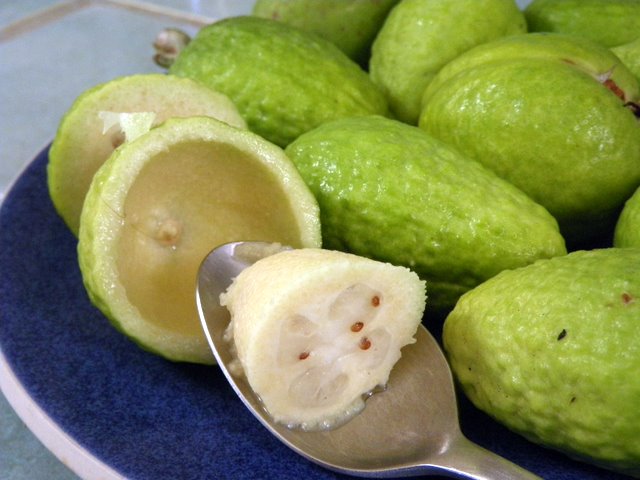
Cut the fruit in half and scoop it out with a spoon. Really tasty.
If you live in the right climate, I really think you ought to try growing the Pineapple Guava. It’s a giving and a forgiving plant for your edible landscape.
If you want to know a lot more about gardening I have lots of posts on my blog and a new e book called The Spring Garden Made Easy. For $4.99 it’s the deal of the century. Check it out here: https://www.ediblelandscapingmadeeasy.com/publications/.
[portfolio_slideshow id=1000].